Most drivers only notice suspension issues when their car starts making weird noises or handling poorly. You might fix bushings, balance tires, or realign your wheels — yet still feel a shaky, unstable ride. If your car feels loose over bumps or creaks when turning, there’s one overlooked suspension part that’s almost always to blame: the strut mount.
Often misunderstood and overlooked during routine maintenance, the strut mount is a small but critical component that connects your strut assembly to your vehicle’s chassis. It plays a huge role in steering response, ride comfort, and overall driving stability.
In this guide, we’ll explain exactly what a strut mount is, how it works, the most common failure symptoms, and why replacing it yourself can save you hundreds of dollars in shop labor costs.
What Is a Strut Mount?
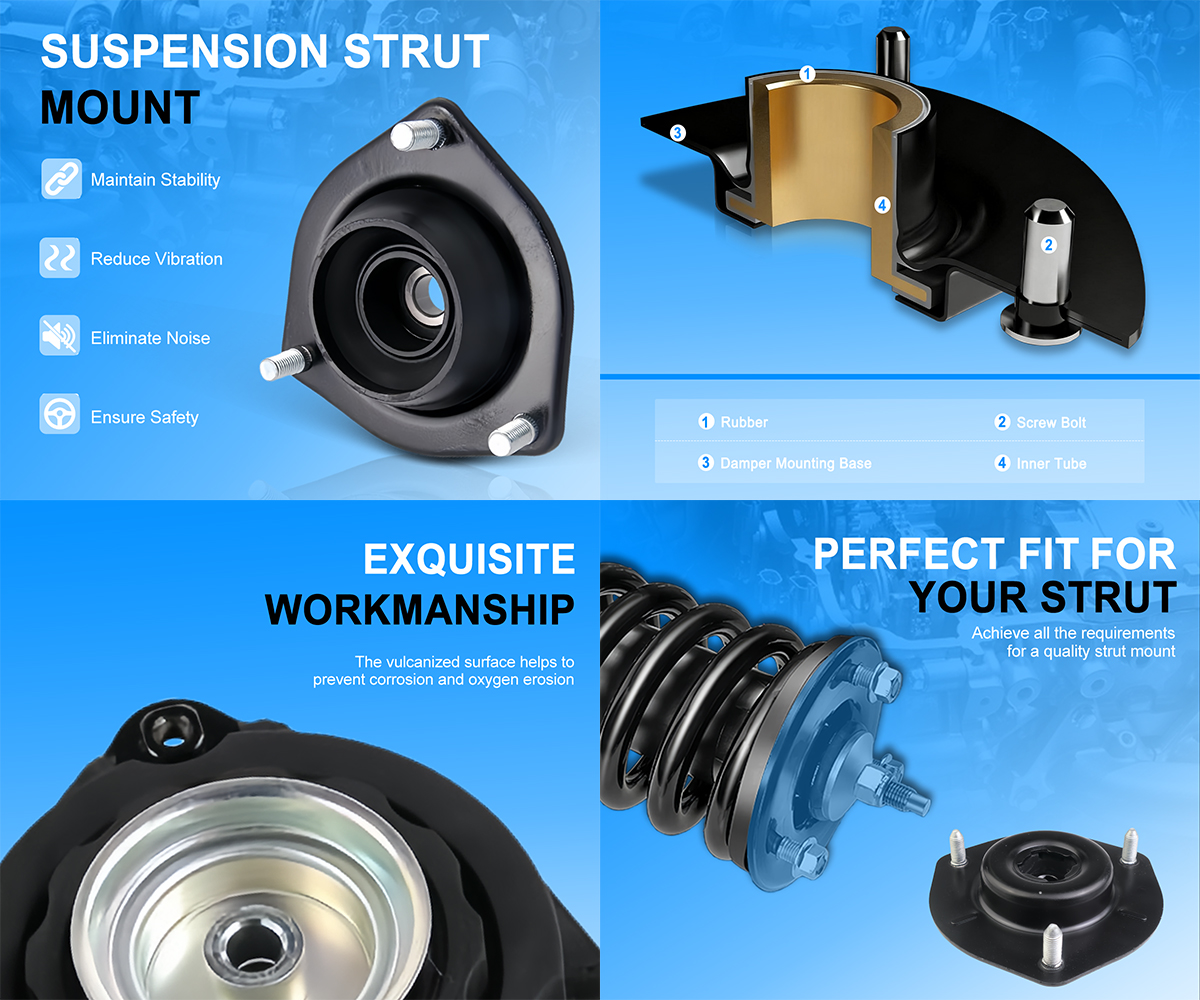
A strut mount (also called a suspension strut bearing or top mount) is a reinforced rubber and metal assembly located at the very top of your vehicle’s strut. It sits between the strut/spring assembly and the car’s body or frame.
Unlike control arm bushings that focus on lower suspension movement, the strut mount handles upper suspension pivot and vibration isolation. Most strut mounts also come with a built-in bearing that allows the strut to rotate smoothly as you turn the steering wheel.
Without a functional strut mount, your strut would sit in direct metal-to-metal contact with the chassis, creating excessive noise, harsh vibration, and premature suspension failure.
Core Functions of a Strut Mount
Strut mounts serve three essential jobs that keep your car driving smoothly and safely:
1. Absorbs Harsh Vibration and Road Noise
The thick rubber cushion inside the strut mount acts as a buffer. It isolates harsh road shocks, engine vibration, and wind noise from transferring directly into the cabin. A healthy strut mount ensures a quiet, soft, and comfortable ride on both highways and rough local roads.
2. Enables Smooth Steering Movement
The integrated strut bearing allows the entire strut and spring assembly to rotate freely when you turn the steering wheel. This eliminates stiff steering, binding, and resistance during cornering. A worn-out bearing will cause creaking, grinding, or tight steering feel.
3. Secures and Stabilizes the Strut Assembly
The strut mount firmly holds the strut in its factory position. It prevents vertical and lateral movement, maintains correct suspension geometry, and preserves your wheel alignment. This is why bad strut mounts often lead to uneven tire wear and wandering steering.
Common Symptoms of a Bad Strut Mount
Many drivers ignore early strut mount failure signs until the problem becomes dangerous. Watch for these key symptoms:
- Creaking or popping noise when turning: The most common sign. The worn bearing sticks and releases tension during steering.
- Clunking noise over bumps: Loose rubber cushioning allows metal movement, creating loud knocking sounds.
- Stiff or tight steering feel: A faulty bearing increases steering resistance.
- Excessive front-end vibration: Vibration transfers directly into the steering wheel and cabin.
- Uneven or premature tire wear: Shifting suspension geometry ruins alignment over time.
- Car feels unstable at high speeds: Vague steering and minor side-to-side floating while cruising.
Do You Need a Professional to Replace It?
Strut mount replacement is one of the most overcharged services at auto shops. Dealers and garages often charge $300–$600 per side, even though this is a beginner-friendly DIY job.
If you already know how to inspect or replace suspension components like control arm bushings, you can absolutely replace strut mounts in your own driveway with basic hand tools.
Quick DIY Replacement Overview
Here is a simplified workflow for DIY strut mount replacement:
- Safely jack up the vehicle and remove the front wheels
- Support the lower control arm with a jack to release suspension pressure
- Unbolt the top strut mount nuts under the hood
- Remove lower strut bolts and drop the strut assembly
- Use a spring compressor to safely disassemble the strut
- Replace the old strut mount, bearing, and dust cover
- Reassemble and reinstall the strut
- Torque all bolts to factory specifications and test drive
Final Thoughts
Strut mounts are small, affordable parts that massively impact your car’s comfort and safety. Ignoring worn strut mounts leads to bad steering, annoying noises, accelerated tire wear, and even damaged struts and control arm bushings.
If you’re already fixing your suspension to solve loose steering and clunking noises, always inspect your strut mounts at the same time. Replacing them as a pair will restore your vehicle’s factory-tight handling and give you a much smoother driving experience.