
An engine mount secures the engine in place, ensuring stability and reducing vibrations. Common failure signs include excessive vibrations and unusual noises. Understanding when to replace them is crucial for maintaining vehicle performance.
As a professional OEM & ODM engine mount factory specializing in high-rigidity iron engine mounts for global aftermarket wholesale, we break down everything you need to know about engine mounts in this guide. This content is tailored for auto parts distributors, repair shop owners, and fleet maintenance teams to help you identify high-quality replacement parts and avoid low-quality aftermarket products.
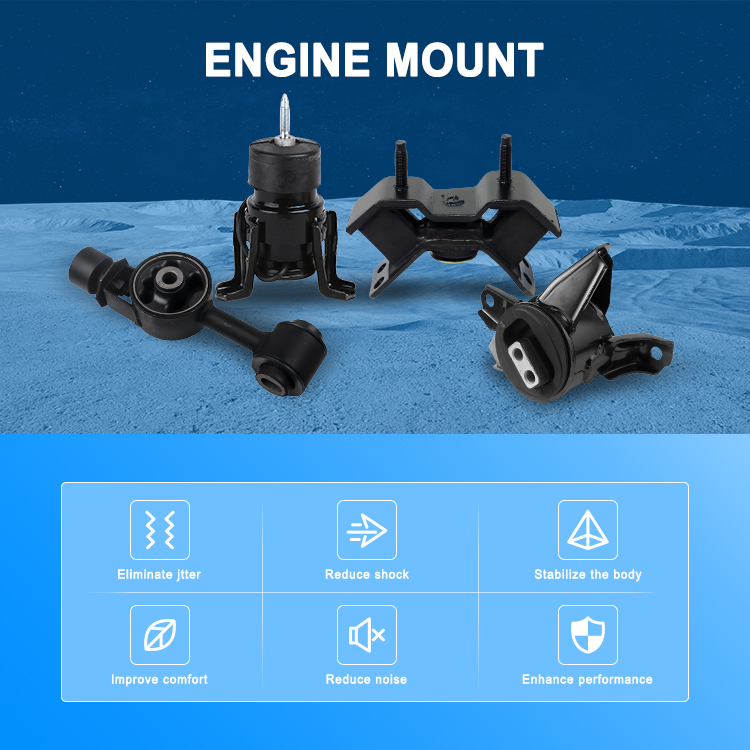
What Is an Engine Mount?
An engine mount is a structural support component made of high-strength iron brackets (our core product) with precision-machined mounting holes and reinforced stress structures. It acts as a fixed bridge between the car engine/transmission and the vehicle frame.
Unlike ordinary rubber-dominant mounts, our all-iron and reinforced iron engine mounts focus on structural stability, anti-deformation performance, and long-term load-bearing capacity, perfectly adapting to daily passenger vehicles, commercial vans, and heavy-load fleet vehicles.
Core Functions of an Engine Mount
A qualified engine mount undertakes three irreplaceable core functions for vehicle operation:
-
Fix & Support Powertrain: Firmly locks the engine and transmission in place to prevent displacement, shaking or shifting during acceleration, braking, and high-speed driving, maintaining the integrity of the vehicle powertrain system.
-
Isolate Vibration & Noise: Stabilizes engine operating vibration and reduces mechanical noise transmission to the chassis and cockpit, ensuring a smooth and quiet driving experience.
-
Protect Auxiliary Parts: Buffers engine jitter caused by road bumps, avoiding excessive wear and damage to connected pipelines, wiring, and chassis accessories.
Common Failure Symptoms of Worn Engine Mounts
Engine mounts are wear-resistant but not lifelong parts. Long-term load-bearing, vibration impact, and aging will lead to structural fatigue and failure. The typical faulty signs are easy for repair technicians and fleet managers to identify:
-
Obvious engine shaking and cockpit vibration during idling and acceleration
-
Abnormal clunking noise when starting the engine or passing rough roads
-
Visible deformation, bending or loose mounting of the engine bracket
-
Engine displacement and uneven powertrain stress, causing accelerated wear of peripheral parts
-
Unstable vehicle driving and reduced overall chassis tightness
Timely replacement of failed engine mounts can avoid higher maintenance costs and potential driving safety hazards, making it a high-frequency replacement part for aftermarket auto repair businesses.
Iron Engine Mount vs. Ordinary Rubber Mount: Key Differences
Most generic aftermarket engine mounts adopt soft rubber structures, which are prone to aging, cracking and degumming. Our factory’s mainstream reinforced iron engine mounts have obvious advantages for commercial and heavy-duty scenarios:
-
Higher Rigidity: Thickened iron bracket structure, effectively resisting deformation under long-term heavy load and strong vibration
-
Longer Service Life: No rubber aging failure, strong anti-fatigue and anti-corrosion performance, suitable for high-frequency use of fleet vehicles
-
More Stable Fitment: 1:1 OEM 3D data design, precise hole position and size, zero installation deviation
Why Choose Factory Direct OEM/ODM Engine Mounts?
Get Wholesale Engine Mounts & Custom Solutions
If you are looking for a reliable factory supplier of high-rigidity iron engine mounts, welcome to contact us. We provide stable wholesale supply, free sample testing, professional OEM/ODM customization services, and competitive factory prices for global auto parts distributors and repair chain stores.