For global automotive distributors, wholesale traders, auto repair chains, and e-commerce sellers, choosing qualified aftermarket car parts manufacturers determines the core profitability and long-term supply chain stability of your business. Many B2B buyers face common industry pain points: overpriced OEM parts with rigid supply policies, inconsistent quality from unknown small suppliers, and frequent after-sales returns that damage brand credibility.
A high-quality aftermarket automotive supplier can deliver OEM-standard or upgraded replacement parts with competitive pricing, stable batch consistency, and flexible bulk supply. Unlike scattered middlemen and small workshops, formal manufacturers support standardized quality control, customized production, and long-term cooperative delivery.
In this professional B2B procurement guide, we will analyze the differences between OEM and aftermarket parts, sort out the most reputable global aftermarket auto parts manufacturers by category, and share practical supplier selection standards for wholesale buyers. Meanwhile, as a professional suspension parts factory with full-chain R&D, production, and global export experience, we deliver factory-level procurement suggestions to help you avoid low-quality suppliers and optimize your supply chain.
OEM vs. Aftermarket Parts: Clear B2B Procurement Differences
Before bulk purchasing, B2B buyers must clarify the positioning, advantages, and limitations of OEM parts, premium aftermarket parts, and low-end generic parts, so as to match products with different regional market demands and customer groups.
OEM Parts
OEM parts are original components produced by designated manufacturers for vehicle brands, featuring 100% perfect fitment and factory-certified quality. However, they are not friendly to B2B wholesale business, with high procurement costs, strict brand supply restrictions, long production and delivery cycles, and zero personalized customization space. Such parts are only suitable for official 4S store matching, unable to support large-scale aftermarket wholesale profit needs.
Premium Aftermarket Parts
Premium aftermarket parts are produced by standardized professional manufacturers in strict accordance with OEM technical parameters and industry testing standards. Many top aftermarket brands are Tier 1 suppliers for international automakers. For B2B buyers, these parts have obvious advantages: balanced cost and quality, complete vehicle model coverage, stable batch consistency, and flexible MOQ support. They are the mainstream and most cost-effective choice for global aftermarket wholesale, repair matching, and cross-border sales.
Low-End Generic Aftermarket Parts
Generic low-cost aftermarket parts are produced by small unqualified workshops, cutting corners on raw materials, precision processing, and quality testing. Such parts have poor fitment, short service life, and potential safety hazards in suspension, braking, and engine systems. Long-term cooperation will lead to massive return orders, poor customer reputation, and hidden operational risks, which is completely unsuitable for formal B2B long-term cooperation.
Our Factory B2B Advantage: Professional Suspension Parts Manufacturer
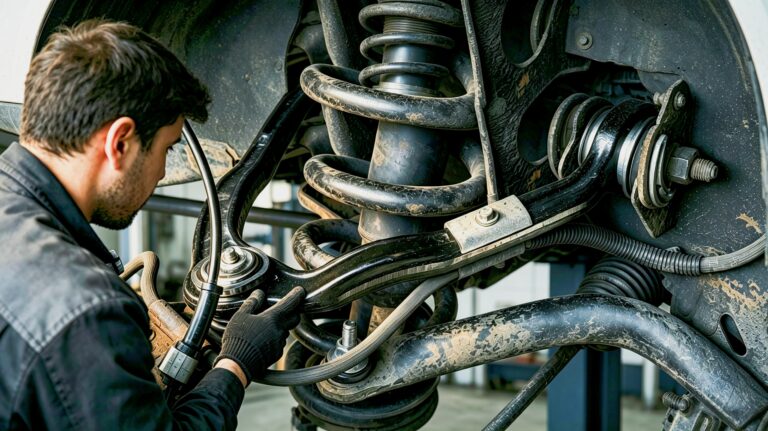
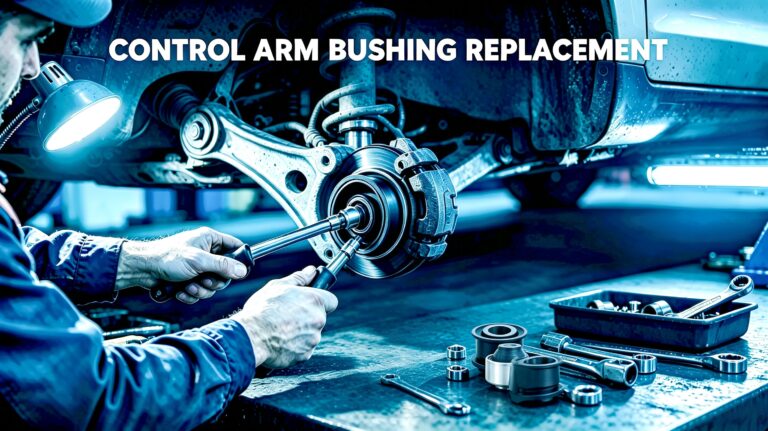
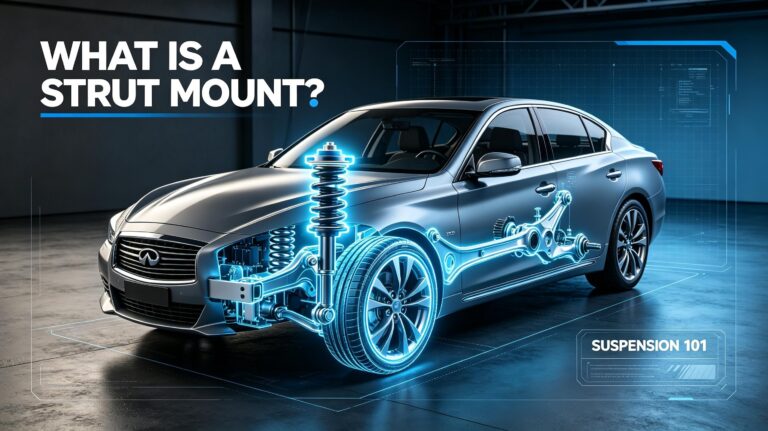
While international first-line brands have stable quality, their procurement thresholds are high, prices are transparent, and profit margins are severely compressed. As a specialized suspension parts manufacturing factory integrating R&D, production, and export, we focus on strut mounts, control arm bushings, and shock absorber accessory series products, providing B2B buyers with more cost-effective and flexible supply solutions.
All our products are produced in accordance with OEM original dimensional standards, adopting upgraded high-toughness rubber formulas and precision CNC machining technology. Compared with middlemen and brand agents, we have core advantages in B2B cooperation:
-
Factory direct sales: Eliminate intermediate markup costs, maximize your profit margin
-
Stable batch quality: Full-process pre-shipment testing including hardness, compression, and fitment inspection, with complete test reports and export certifications
-
Flexible cooperation mode: Support small-batch trial orders, large-batch customized production, and private label OEM/ODM service
-
Global stable supply: Mature production line scheduling, fast delivery cycle, long-term stable supply for global distributors and repair chains
7 Professional B2B Standards to Choose Aftermarket Parts Suppliers
For long-term wholesale business, brand reputation is not the only judgment standard. Supplier strength, quality control system, and after-sales service are the key to sustainable profitability. Below are 7 practical supplier selection rules for B2B buyers:
1. Quality First, Reject Low-Price Inferior Products
Suspension, braking, and engine safety parts are related to vehicle driving safety. Never cooperate with suppliers who cut corners on materials and processes for low prices. Formal manufacturers insist on standardized production, which fundamentally reduces your after-sales return risks.
2. Match Products with Target Market Positioning
For daily family civilian vehicles, standard OEM-equivalent aftermarket parts are cost-effective and suitable for large-scale bulk sales; for high-end and modified vehicles, upgraded reinforced parts can help you open high-value markets and increase profit margins.
3. Avoid Unqualified Small Workshop Suppliers
Small workshops have no standardized quality control system, resulting in inconsistent batch quality and inaccurate product fitment. Long-term cooperation will cause continuous customer complaints and damage your brand reputation in the local market.
4. Verify OEM Part Number Compatibility
Reliable manufacturers can provide complete OEM part number cross-reference data to ensure that product dimensions, load-bearing parameters, and vehicle fitment fully meet industry standards, avoiding batch delivery errors and customer losses.
5. Focus on Supplier Warranty and After-Sales System
Formal B2B suppliers provide standardized batch warranty policies and professional after-sales technical support. A complete after-sales system is the core guarantee for your long-term stable business operation.
6. Choose Specialized Segmented Manufacturers
No manufacturer can achieve full-category excellence. It is more reliable to choose professional suspension factories for suspension parts and professional brake brands for brake parts. Specialized segmented manufacturers have more mature technology and lower after-sales rate.
7. Refer to Real Bulk Cooperation Feedback
The most authentic product quality comes from the long-term cooperation feedback of global distributors and repair chains. Focus on batch durability and after-sales data, rather than single product publicity.
Conclusion
In the global aftermarket auto parts industry, reliable suppliers are the core competitiveness of B2B business. Excellent aftermarket parts are not low-quality substitutes for OEM parts. Formal and professional manufacturers can provide upgraded products with better quality and more competitive prices, helping buyers stabilize market share and expand profit space.
First-line international brands have high market recognition but limited profit margins. As a trustworthy suspension parts factory focusing on B2B global export, we rely on independent R&D advantages, strict quality control, flexible customized services, and factory direct sales prices to provide global distributors, repair chains, and cross-border sellers with one-stop suspension parts procurement solutions. We are committed to becoming your long-term stable and high-quality cooperative supplier.